
 ABC Restoration TeamFull guide coming soon
Client
Favorite
See what homeowners say about ABC Restoration
Read Our Google ReviewsReal homeowners, real jobsWhy Choose ABC Restoration for Water Damage?
Fast Emergency Response
Water spreads by the minute. Our line is answered 24/7, and a crew is dispatched as soon as you hang up — on site in under 60 minutes.
Trained Techs, Pro-Grade Equipment
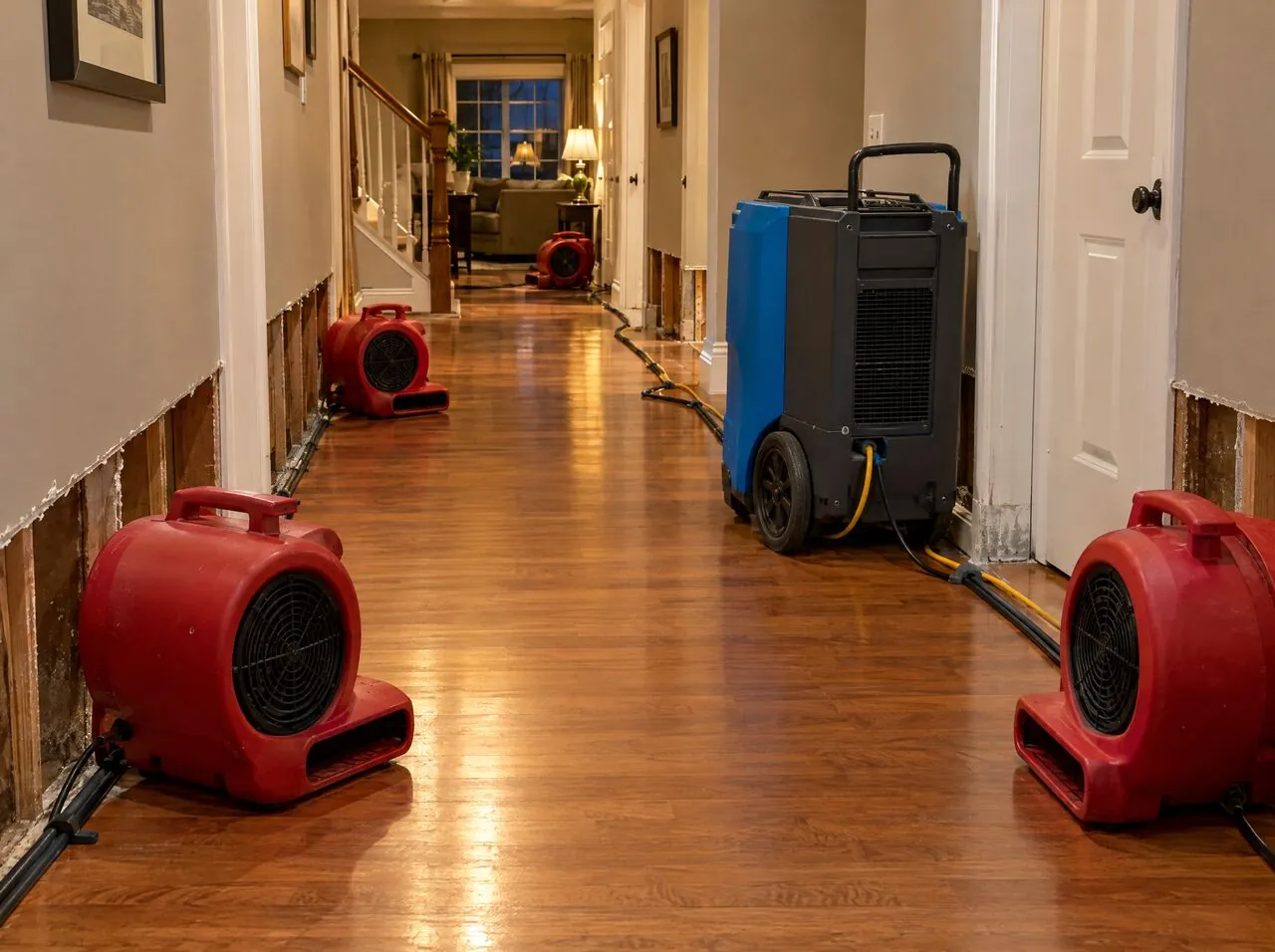
Moisture meters, extraction units, commercial dehumidifiers and air movers — run by technicians trained to industry drying standards.
Clear, Upfront Estimates
Before repairs begin, you’ll see a written scope and estimate. No surprise line items, no pressure.
We Work With Your Insurance
We document every room with photos and moisture logs and work directly with your adjuster to keep the claim moving.
How We Get It Done
Step 1
Damage Assessment
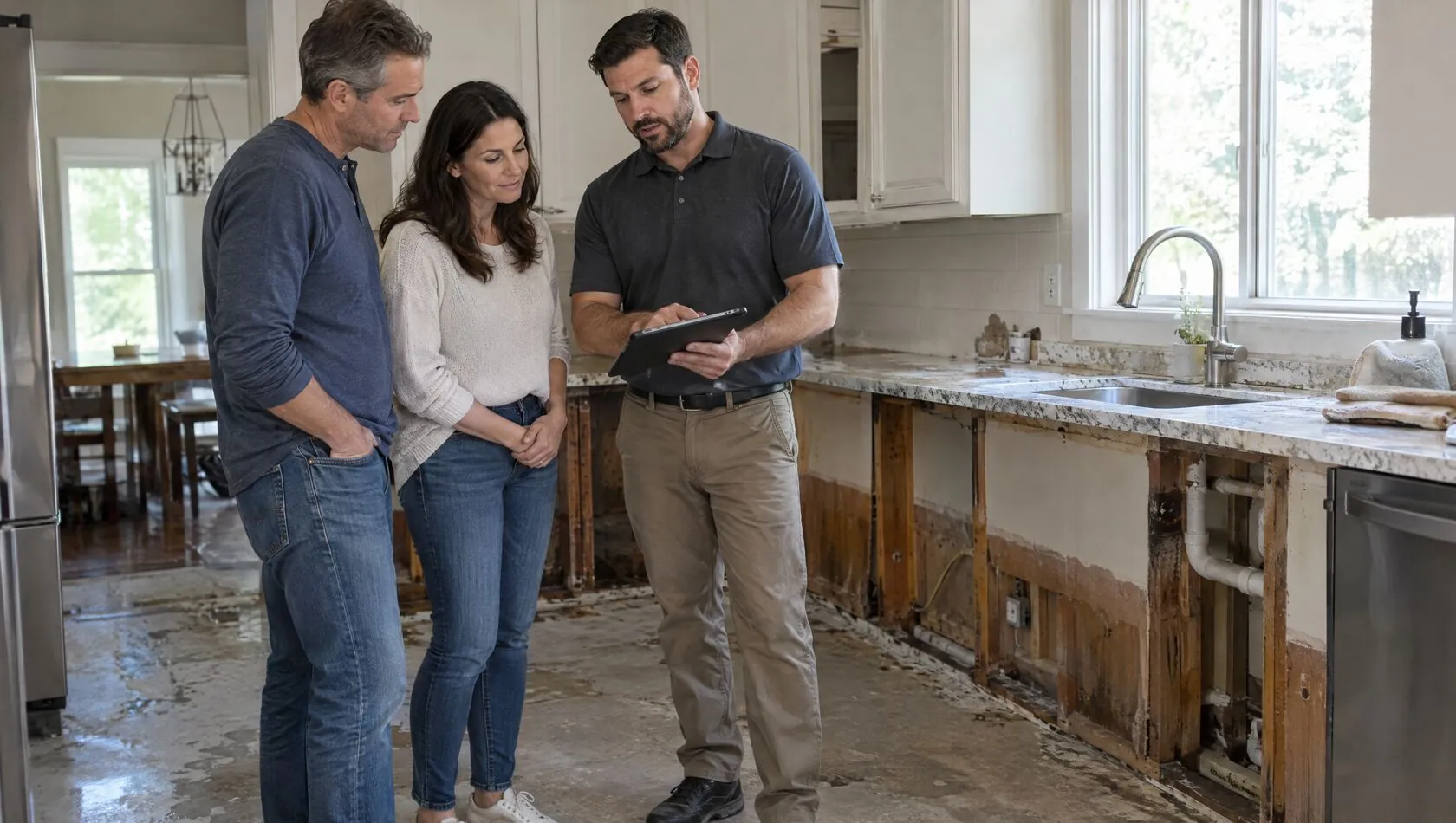
We find the source, stop it if it’s still running and measure how far the water has traveled — including inside walls and under floors.
Step 2
Water Removal
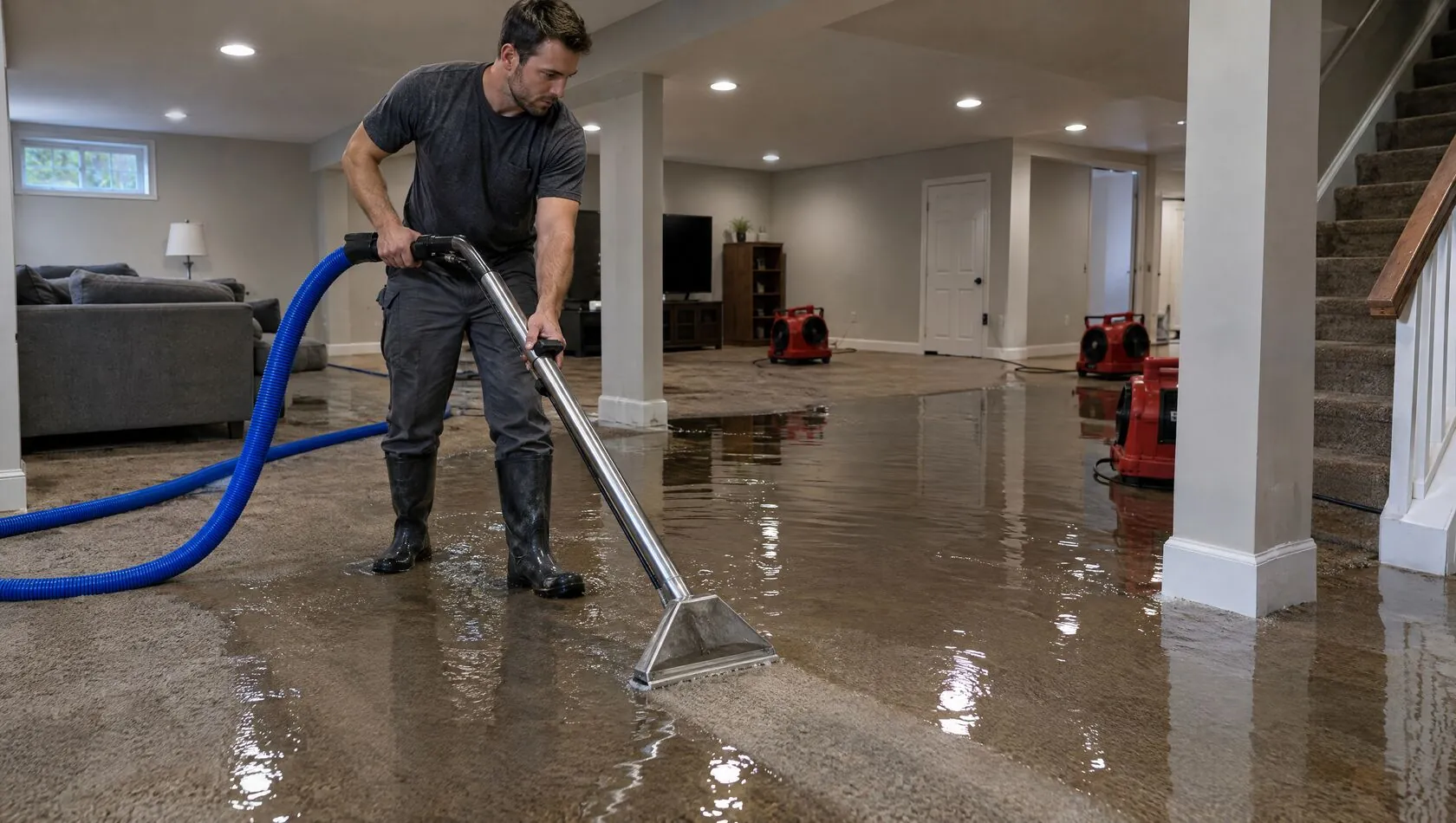
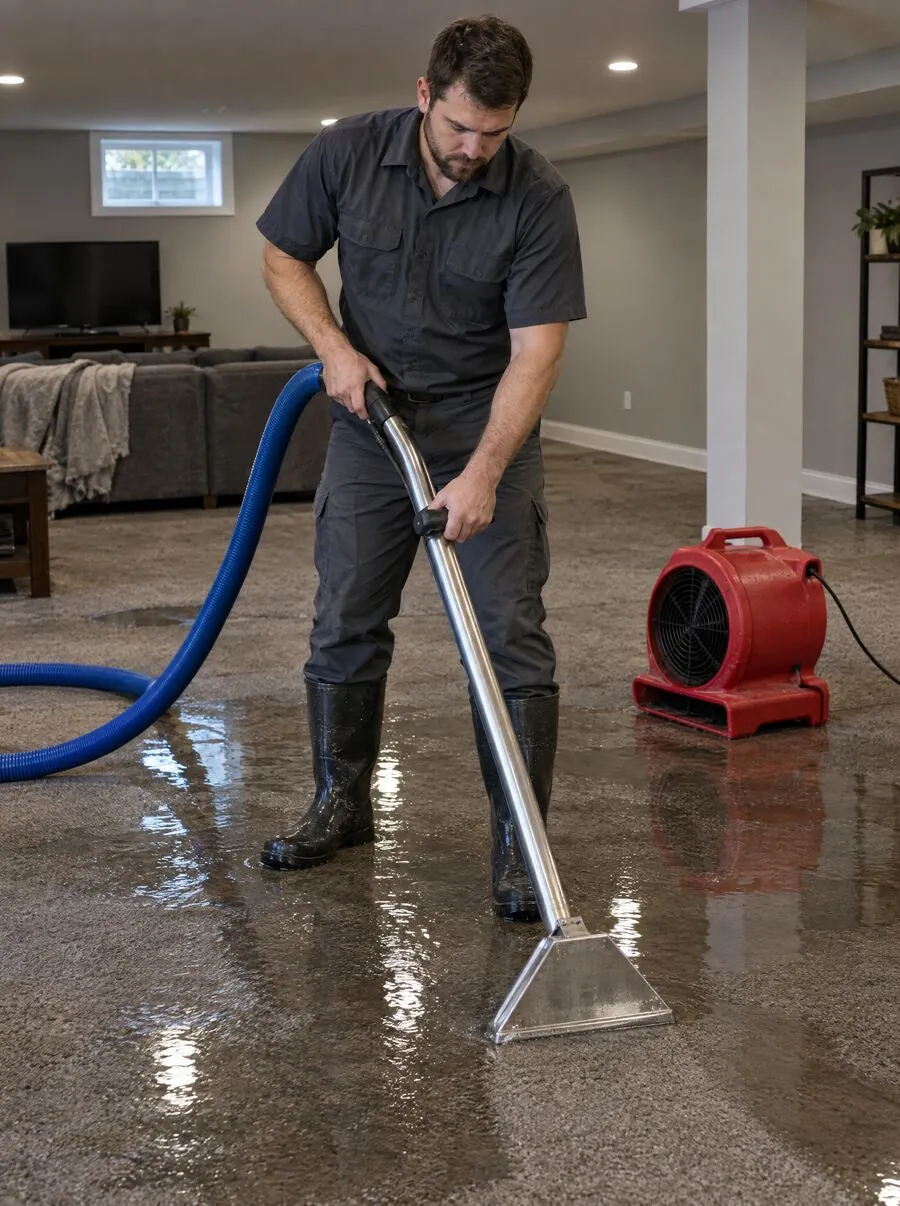
Truck-mounted and portable extractors pull standing water out fast, limiting how much soaks into flooring and drywall.
Step 3
Moisture Control
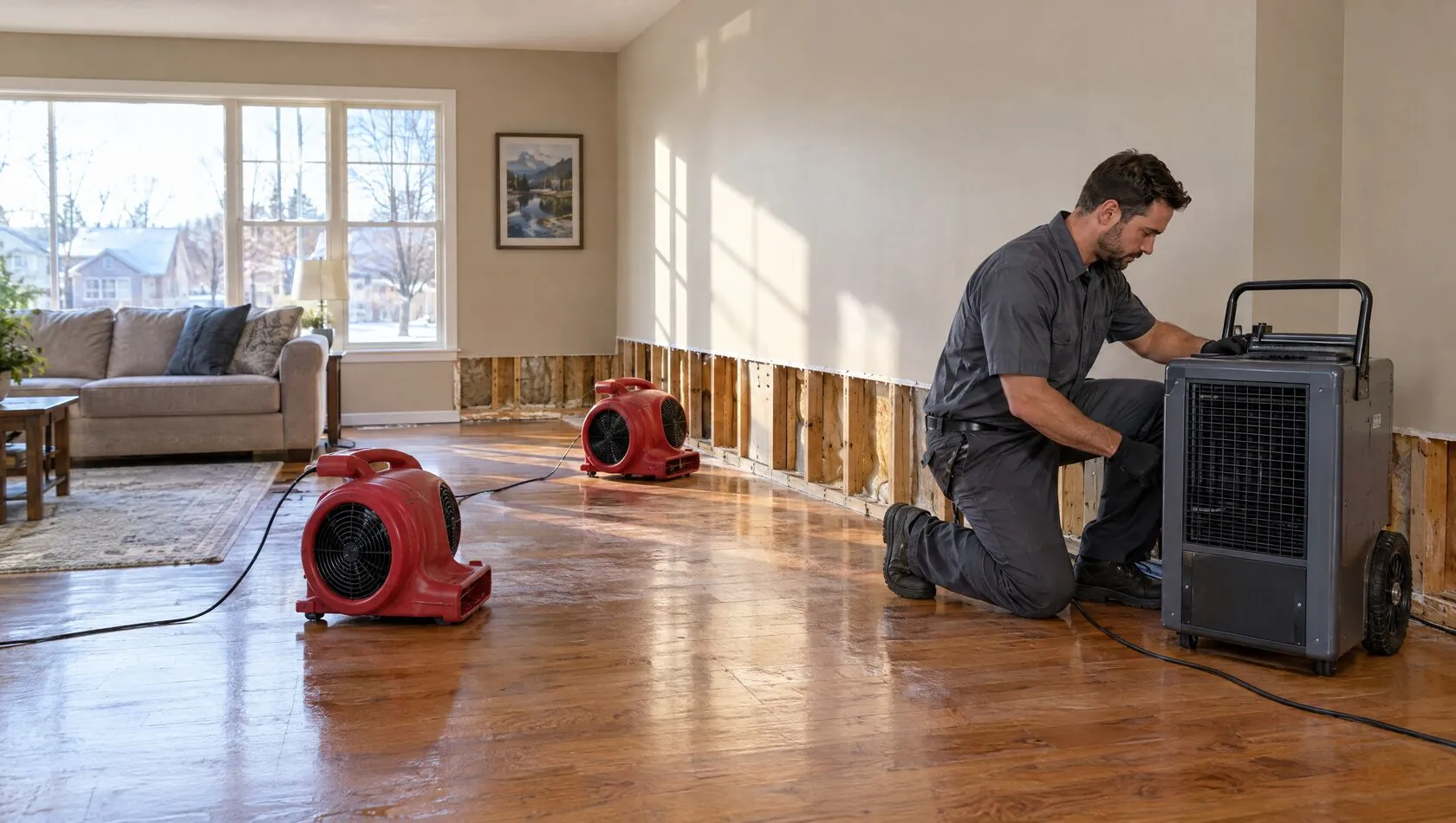
We remove what can’t be saved — wet padding, swollen baseboards, saturated drywall — and set up containment where needed.
We Work With Your Insurance
We document every loss the way adjusters need it — photos, moisture logs and itemized estimates — and work with your carrier directly.
What Class of Water Damage Do You Have?
Restoration pros classify water damage by how much water is involved and how deeply it has soaked in. The class sets the drying plan.
Class 1
Minimal
A small area, mostly low-absorbency materials like tile or sealed wood. Dries quickly when it’s handled right away.
Class 2
Significant
A whole room is affected. Water has wicked into carpet, pad and up the walls — usually less than two feet.
Class 3
Extensive
Water came from above or spread widely. Ceilings, walls, insulation and subfloor are saturated.
Class 4
Specialty Drying
Water has soaked into dense materials — hardwood, plaster, brick or concrete — that need specialized drying and more time.
Real Words From Real Homeowners
Did We Help You Recover?
A quick Google review helps your neighbors find a restoration team they can trust — and it means a lot to our crew.
Why Choose ABC Restoration?
A side-by-side look at what you can expect from us compared with a typical contractor.
| What you get |  ABC Restoration | Typical Contractor |
|---|---|---|
| 24/7 emergency service | Answered 24/7, 365 days a year | Limited hours or voicemail |
| Response time | On site in under 60 minutes | Hours — sometimes next day |
| Trained technicians | Trained to industry drying standards | Varies by crew |
| Moisture documentation | Daily readings and photo logs | Often eyeballed |
| Insurance coordination | We work directly with your adjuster | You manage the claim |
| Cleanup through rebuild | One team from extraction to final paint | Multiple contractors to juggle |
Frequently Asked Questions
What should I do right after water damage?
If it’s safe, shut off the water at the main valve and turn off power to affected areas at the breaker — never walk through standing water to reach a panel. Move valuables out of the wet area, photograph everything for your claim, and call a restoration company. The first 24–48 hours matter most for preventing mold.
Is water damage covered by homeowners insurance?
Sudden, accidental damage — like a burst pipe or a failed water heater — is typically covered. Damage from slow leaks or deferred maintenance usually isn’t, and flooding from rising surface water generally requires a separate flood policy. We’ll help you document the loss so your adjuster has what they need.
How long does it take to dry out a house?
Most structural drying takes about three to five days, depending on the materials and how long they were wet. We check moisture readings daily and only pull equipment when materials reach dry standards — not when they just look dry.
Can I just use a shop vac and fans myself?
For a small, clean spill caught right away, maybe. But water wicks into drywall, insulation and subfloors where fans can’t reach, and contaminated water needs protective gear. Professional extraction and dehumidification prevent the hidden moisture that leads to mold and warped floors.
What’s the difference between water mitigation and restoration?
Mitigation stops the damage from getting worse — extraction, removing wet materials and drying. Restoration is the repair work that follows: drywall, flooring, paint and trim. We handle both, so there’s no hand-off between companies.
Can my hardwood floors be saved?
Often, if we get to them quickly. Specialized floor-drying systems can pull moisture out of hardwood, and some cupping settles as the wood dries. Floors that stay cupped, or that were soaked for a long time, may need to be replaced.
Inside Water Damage
ABC Restoration TeamFull guide coming soon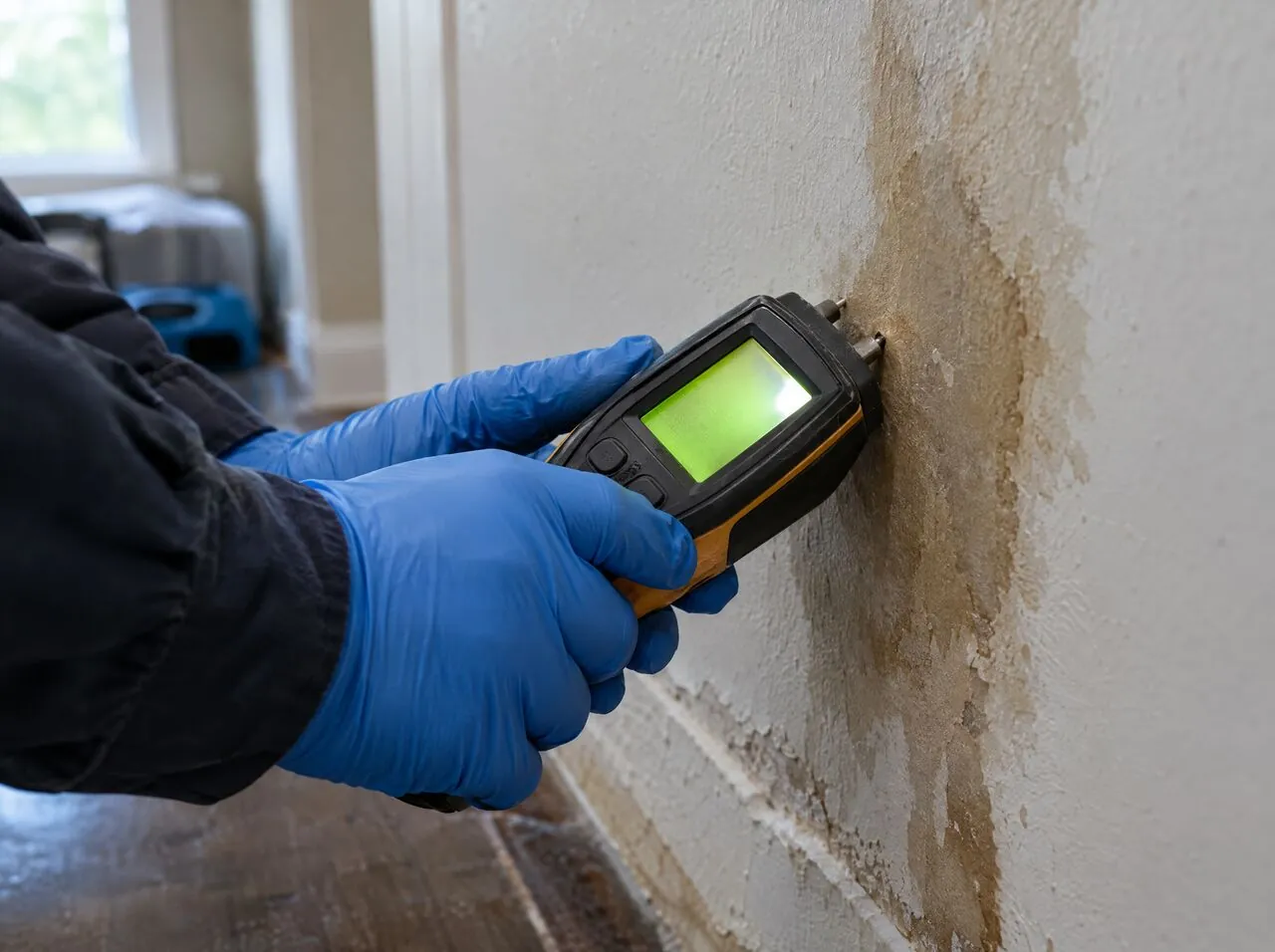 ABC Restoration TeamFull guide coming soon
Clean, Gray or Black: Which Water Damage Category Is Yours?
 ABC Restoration TeamFull guide coming soon
Is Water Damage Covered? What Insurance Usually Pays For
Let’s Talk Water Damage
Talk to an Expert
Questions about damage, a claim or what happens next? Call anytime for straight answers.
Call (612) 555-0147Answered 24/7
We’ll Call You
Leave your number and a few details, and a team member will call you back shortly.
Request a CallbackShort form, two minutes
Ready to Book?
Schedule a non-emergency inspection or estimate at a time that works for you.
Book an InspectionPick a time that suits you